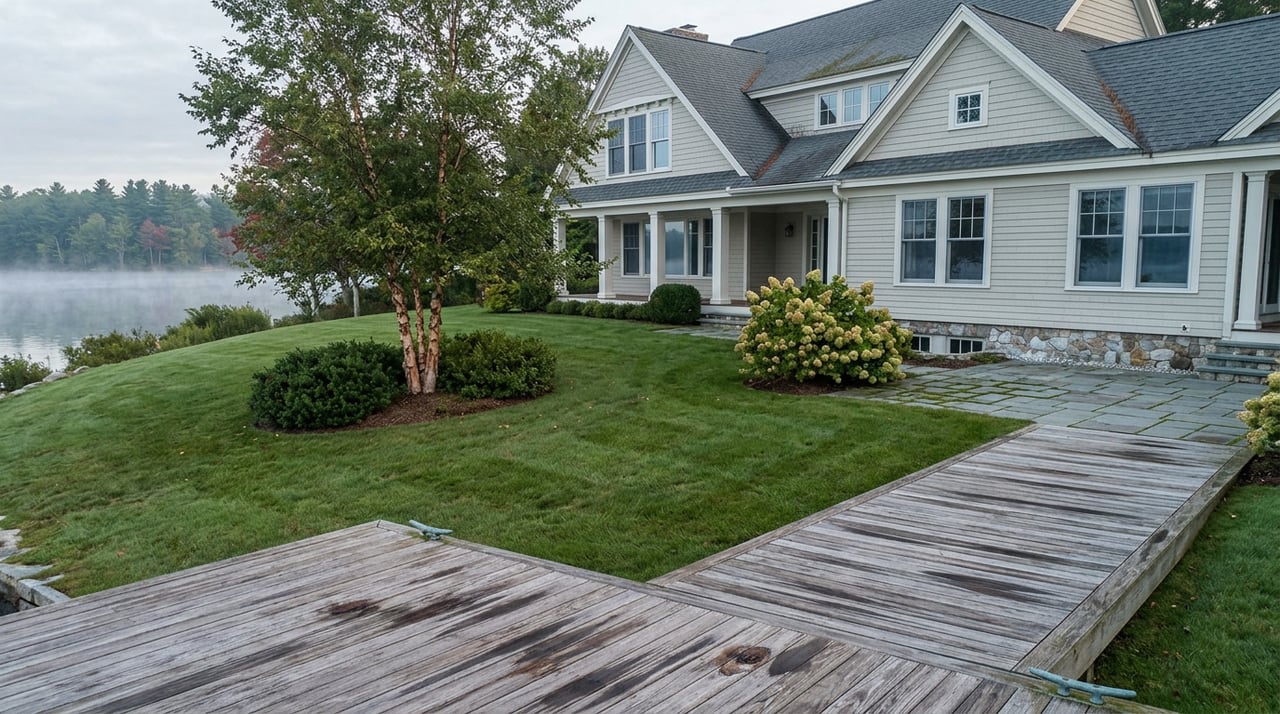
Two lots sit half a mile apart inside Treasure Lake's gates. One is a cove-front parcel with a gentle slope to the water, community water and sewer already stubbed to the road, and no deadline on when you have to start building. It listed this spring for $195,500. The other is a wooded interior lot a few sections back, with no water view or golf frontage. Its resale prospects may differ, and it may take longer to sell. In some cases, a lot could appear on Clearfield County's tax sale list with a few hundred dollars in unpaid fees attached.
Here is the part that surprises most buyers: both lots pay the same annual assessment to the Treasure Lake Property Owners Association. That per-lot charge is the baseline for the figures below.
The Flat Fee That Doesn't Flex With Location
Public listing data from this spring shows Treasure Lake's HOA assessment running somewhere around $117 to $123 a month, or roughly $1,400 to $1,475 a year, depending on how a given lot's documents present it. That figure covers the shared infrastructure that makes Treasure Lake function as a resort community: road maintenance, gate security, the lakes, the golf courses, and the recreational programming that draws people to the development in the first place.
What it does not do is scale to what your particular lot is worth. A waterfront parcel with a boat slip potential and an interior wooded lot with no lake access pay into the same pool, at the same rate, for the same year-round services. That is normal for a homeowners association. The same annual assessment applies to lots with different locations and resale prospects.
Back in 2017, that same annual assessment was set at $980. Public data from this spring puts the comparable figure closer to $1,400. That is a meaningful climb over roughly nine years, and it applies uniformly whether the lot underneath it is worth six figures or barely worth the paper the deed is printed on.
The Fee Follows the Owner, Not Just the Dirt
Buyers sometimes assume that if a lot turns out to be a bad investment, the worst outcome is losing whatever they paid for it. Treasure Lake's legal history says otherwise.
In 2003, the Pennsylvania Superior Court ruled on a case brought by the Treasure Lake Property Owners Association against owners who argued they should not have to keep paying maintenance fees on undivided-interest units they considered essentially worthless. The court sided with the association, holding that because the recorded restrictions tied the obligation to ownership itself, the association could pursue owners personally for unpaid fees, not just place a claim against the land. The reasoning: those facilities, the roads, the golf courses, the lakes, benefit every owner in the community, whether or not any individual owner uses them.
That ruling matters more to a land buyer than it might first appear. A lot that looks like a low-risk, low-cost way to get into Treasure Lake can turn into an ongoing personal obligation that outlasts your interest in ever building on it. Walking away from a parcel does not automatically walk you away from the bill.
Association Finances and Tax-Sale Prices
The figures below include association budget information and county tax-sale upset prices for vacant lots and lots with houses.
Back in the 2017-18 fiscal year, the association's own budget documents showed it carrying $5.75 million in deferred maintenance, separate from big-ticket items like storm water management and lake dredging that weren't even included in that figure. At the same meeting, directors noted that of 1,123 undivided-interest owners tied to the development's campground, only 230 were actually current on their payments.
Clearfield County's own tax sale records offer another comparison. Across past county tax sale lists, vacant lots inside Treasure Lake, the ones with no structure on them, no house, no cabin, just land, have shown up with upset prices in the $850 to $1,260 range. Lots in the same sections with an actual house on them have carried upset prices anywhere from $5,700 to over $25,000.
Clearfield County still runs this process every year, and the county's tax sale page is public.
What This Means If You're Actually Shopping Land Here
The obvious way to compare Treasure Lake lots is price and acreage. Another consideration is how a lot’s resale prospects compare with its fixed annual cost, which rises regardless of what the lot is worth.
A few things worth doing before you commit to a specific parcel:
- Ask for the lot's payment history, not just the current listing price. A resale or estoppel certificate from the association will show whether assessments, fines, or special charges are current, and whether anything unpaid would transfer with the deed.
- Confirm what utilities are actually at the lot line versus what the listing implies. Waterfront and golf-adjacent lots more often have water, sewer, and electric already run to the road. Interior lots vary more, and running utilities later adds real cost on top of the assessment you're already paying.
- Look at how long similar lots in that specific section have sat on the market, not the development-wide average. Treasure Lake spans roughly 9,000 acres and multiple distinct sections, and demand is not uniform across all of them.
- Ask what the current fiscal year's assessment is before you assume last year's figure still applies. Given the climb from $980 in 2017-18 to the neighborhood of $1,400 today, the number keeps moving.
Right now, there is no shortage of raw land to compare inside Treasure Lake. Active listing counts for vacant lots and land in the development regularly run into the dozens at any given time. That kind of supply gives a buyer real leverage to be selective about location rather than settling for whatever lot happens to be cheapest on paper. It also means sellers of interior, non-waterfront lots are competing against a wide field, which is part of why some of those lots take years to move.
A Few Common Questions
Does a smaller or less desirable lot pay a lower assessment? No. The Treasure Lake assessment is set annually by the association's board based on the community's operating and capital budgets, and it applies per lot regardless of size, location, or whether the lot is built on.
Can unpaid fees on a lot I no longer want affect other property I own? The 2003 Superior Court ruling in the Treasure Lake case established that the association can pursue owners personally for unpaid maintenance fees, not only through a claim against the lot itself. If you're holding a lot you no longer want, that is worth resolving deliberately rather than simply letting the bills lapse. This is general information, not legal advice, and anyone in that position should talk to an attorney about their specific situation.
Is water and sewer already available on most Treasure Lake lots? It varies by lot and section. Some waterfront and golf-course-adjacent parcels advertise water, sewer, and electric already at the road. Interior lots should be checked individually rather than assumed.
If you're weighing a specific lot in Treasure Lake, whether it's waterfront, golf frontage, or an interior parcel that looks like a bargain, the location within the development matters as much as the price on the sign. Nelson Realty works this market section by section and can walk you through a lot's assessment history, utility status, and resale outlook before you make an offer. Search current Treasure Lake listings or request a free valuation to see where a specific property actually stands.